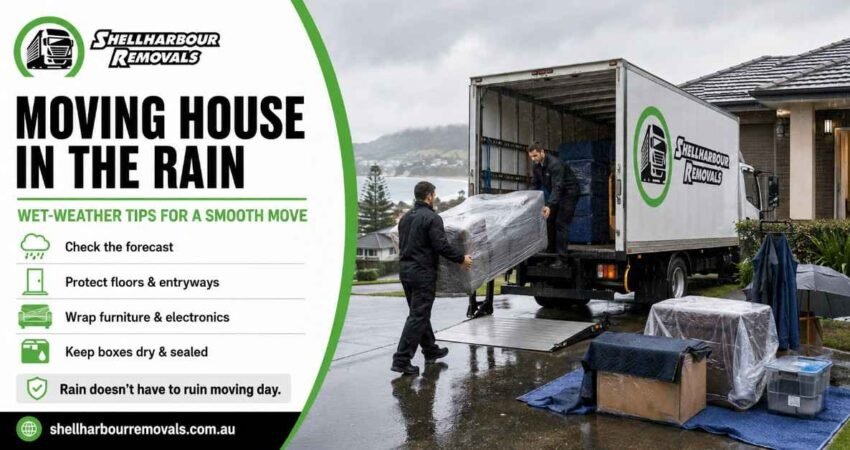
Moving House in the Rain: Wet-Weather Tips Shellharbour
Settlement day arrived for a Shellharbour family last winter, and so did the rain. By 7am, the Illawarra coast was under a steady downpour with no sign of clearing. The truck was booked, the keys had to be handed over, and postponing wasn’t an option.
Moving house in the rain is manageable and safe when you work with experienced removalists and prepare your belongings correctly. Professional teams carry wet-weather equipment, adapt their loading approach, and follow safety protocols that keep your furniture and your floors protected regardless of conditions. Rain rarely stops a move. Poor preparation does.
The Illawarra and Southern Highlands receive rain year-round, with coastal areas around Wollongong and Kiama averaging over 1,100mm annually. Knowing what to expect, and how to prepare, makes the difference between a stressful day and one that goes smoothly.
What You Will Learn
- How removalists operate during rain and when they may pause a move
- Safety thresholds and what professional teams monitor before and during a job
- Packing materials that protect against moisture and water damage
- Room-by-room protection methods for furniture, electronics, and soft goods
- A detailed checklist to work through on a rainy moving day
Removalists Operating in Rain: Safety and Policies
Reputable removalists work in light to moderate rain as a standard part of the job. Rain alone is not a reason to cancel or delay. What changes is the pace, the protection used, and the care taken on entry and exit points.
Safety Considerations for Rain
The decision to proceed, slow down, or pause a move depends on conditions at the property, not just the forecast. A steady drizzle on a flat suburban driveway is manageable. Pooled water on steep access, waterlogged lawns that a truck could sink into, or electrical items being loaded during heavy downpour require a pause.
Slippery surfaces are the primary hazard. Wet timber decking, tiled entry steps, and grass verges become high-risk underfoot when carrying heavy loads. Experienced removalists use non-slip footwear, slow their pace, and lay down protective floor runners inside both properties before the first item crosses the threshold.
The Bureau of Meteorology issues weather warnings for NSW across three thresholds: rainfall watches, weather warnings, and severe weather warnings. Removalists monitor these in the lead-up to a job. A standard rainfall warning does not trigger a cancellation. A severe weather warning, particularly one involving flash flooding risk in areas like the Woronora Plateau or the escarpment roads above Wollongong, changes the situation, and a reputable team will contact you directly to discuss options.
For clients in the Southern Highlands, long unsealed driveways become a separate challenge after sustained rain. Bowral and Bundanoon properties with gravel or dirt access can become impassable for a large truck. This is a conversation worth having with your removalist before moving day, not the morning of.
Delays caused by unsafe conditions affect your move cost and timeline. If a job is paused mid-way due to a weather escalation, you may still incur hourly charges depending on your booking terms. Confirm your provider’s wet-weather delay policy in writing before your move date.
Weather Planning and Monitoring
Check the Bureau of Meteorology forecast for your suburb daily in the week before your move. The BOM radar, available at bom.gov.au, gives real-time rainfall intensity and direction, which is far more useful than a general forecast on a phone app.
Brief your removalist the day before. A good team will already have checked conditions, but confirming the forecast, your driveway surface, and any access constraints gives everyone a shared picture. Removalists operating across the Illawarra and Southern Highlands know that conditions can vary sharply between Shellharbour and Moss Vale even within the same weather event.
Rain insurance or cancellation coverage is not standard on most Australian removalist bookings. Some providers offer it as an add-on, and some comprehensive home and contents policies cover goods in transit during a move. Check your existing policy before your move date and ask your removalist what their goods-in-transit coverage includes.
Tips for Moving House in the Rain: Packing and Protection
Good preparation before moving day in the rain removes most of the stress on the day itself. The work happens the night before, not in the driveway with wet hands.
Packing Materials for Wet Conditions
Standard cardboard boxes absorb moisture and lose structural integrity fast in rain. If you’re packing yourself, use plastic storage crates or double-box the most water-sensitive items. Professional packing services use purpose-built materials that perform far better in wet conditions.
Mattress bags are plastic-lined covers that protect mattresses from moisture and road grime. Wardrobe boxes keep hanging clothes dry and off wet surfaces. Purpose-made furniture blankets, when combined with plastic wrap, stop moisture from reaching timber and upholstered surfaces during transit.
For electronics, keep original packaging where you have it. Where you don’t, wrap items in plastic sheeting before placing them in boxes, and clearly label those boxes to ensure they load into the truck last and unload into shelter first.
Resealable zip-lock bags inside boxes protect loose documents, chargers, remote controls, and anything paper-based. A roll of heavy-duty plastic wrap is one of the most useful items on a rainy move day, and it costs almost nothing.
Room-by-Room Protection Methods
Bedrooms: Mattresses go into mattress bags before leaving the room. Wardrobe contents stay in wardrobe boxes or large zip-up garment bags. Bedside items and lamps wrap in plastic before boxing.
Living areas: Sofas and armchairs wrap in plastic stretch film from base to top. Timber coffee tables and shelving units get a blanket wrap first, then plastic over the top. Art and mirrors need corner protectors, a blanket layer, and plastic wrap, then placement in mirror boxes.
Kitchen: White goods like fridges and washing machines are wrapped and loaded early, positioned at the back of the truck for stability. Boxes containing breakables stay dry by default if they’re properly sealed, but do not stack them directly on the truck floor if water is entering through the rear.
Home office and electronics: Monitors and desktop towers move in padded boxes or original packaging with plastic sheeting as a second layer. Do not load electronics in heavy rain without a dry hand-off point at both ends of the move.
Outdoor items: Garden furniture, barbecues, and pot plants are lowest priority and load last. They can tolerate moisture far better than anything else on the truck.
Detailed Rainy Move Day Checklist
Work through this in order on a wet moving day:
- Night before: seal all boxes, wrap furniture in plastic, bag mattresses, charge any device you’ll need on the day
- Morning of: check BOM radar for your suburb and your destination suburb separately
- Before the truck arrives: lay old towels or floor runners at every door threshold to stop water tracking inside
- On arrival: show your removalist the driveway surface and any access points that are wet or uneven
- During loading: keep a sheltered staging area, even a covered verandah, between the house and the truck
- Electronics and documents load last from the house, meaning they spend the least time exposed during transit
- At the new property: have the runners down before the first item crosses the threshold
- Unload into rooms directly, not into a hallway pile, so items don’t sit on wet floors
- After unloading: check boxes and wrapped items for moisture before storing anything in a wardrobe or cupboard
Why Choose Shellharbour Removals
Shellharbour Removals has been working across the Illawarra and Southern Highlands for over 11 years, completing 1,267+ jobs for 846+ clients across locations from Wollongong and Kiama through to Bowral, Moss Vale, and Bundanoon. The team knows this region’s weather, its access conditions, and its properties.
- Local knowledge: Ethan Walker, Jack Thompson, and Liam Carter have worked rain jobs across coastal Shellharbour and high-country Southern Highlands properties, understanding how conditions differ between the two
- Wet-weather equipment: furniture blankets, plastic wrap, mattress bags, and floor runners are part of every job
- Transparent process: a clear 3-step approach covering packing, loading, and unloading, with no hidden charges
- Full-service option: professional packing and unpacking available, so you’re not scrambling to prepare boxes the night before a wet move
- Available daily: the team is reachable 8:00 AM to 5:00 PM, seven days a week, for pre-move weather questions and booking adjustments
Sarah Mitchell described her move as simple, safe, and stress-free. Emma Collins noted friendly movers… reliable. That consistency across weather conditions, property types, and suburbs is what 11 years of local work builds.
Call Shellharbour Removals on 0449 994 831 to discuss your move date and get a clear, obligation-free quote.
Frequently Asked Questions
Do removalists work on rainy days?
Removalists work through light to moderate rain as a standard part of the job. A wet forecast is not a reason to cancel your move. Experienced teams adjust their pace, use protective materials, and monitor Bureau of Meteorology warnings throughout the day. Severe weather warnings, particularly flash flood risks, are the main trigger for a delay or pause.
What should I do on moving day if it rains?
Check the BOM radar for your suburb and your destination before the truck arrives. Lay floor runners at every entry point, have a sheltered staging area between the house and the truck if possible, and load electronics last from the property. Confirm your removalist’s wet-weather procedure the day before so there are no surprises on the morning itself.
How can I protect my belongings when moving in the rain?
Wrap furniture in plastic stretch film over a blanket layer, place mattresses in purpose-made mattress bags, and use plastic-lined wardrobe boxes for clothing. Double-line boxes containing electronics with plastic sheeting. Keep original packaging for screens and towers where available. Seal all boxes the night before and label moisture-sensitive items clearly so they receive priority handling.
Rain Does Not Have to Derail Your Move
A wet moving day feels worse at 6am than it actually turns out to be. With the right materials packed and sealed the evening before, a team that knows how to work in local conditions, and a clear plan for access and floor protection, most rainy moves finish on time and without damage.
Call Shellharbour Removals on 0449 994 831 to book your move and talk through any wet-weather questions before your moving day arrives.
—